AI news today: let Chrome judge if posts are BS
Your uncle just shared another "doctors don't want you to know" post. Your feed is drowning in election hot takes that cite sources nobody can verify. And that crypto influencer swears this altcoin will 10x by Friday.
You don't have time to fact-check everything. Neither does anyone else. That's exactly why AI-powered Chrome extensions are becoming table stakes for anyone who doesn't want to accidentally share garbage.
Tools like TLDRly now analyze posts, articles, and comments as you scroll—flagging manipulative language, unsupported claims, and emotional manipulation tactics before you even finish reading. They cross-reference claims against verified databases and spit out trust scores. Think of it as a BS detector that actually works at internet speed.
What you're getting:
- Real-time detection: Spots logical fallacies, emotional manipulation, and claims pulled from thin air while you browse
- Trust scores: Numerical credibility ratings so you don't have to guess
- Actually sophisticated tech: NLP, evidence retrieval, sentiment analysis—not just keyword matching
- Local processing: Your browsing data stays in your browser, not some server
Where this actually matters:
- Breaking news: Quickly assess whether that viral story is legit before the real journalists catch up
- Social media: Catch fake health tips, financial scams, and engagement bait before you fall for them
- Professional research: Summarize LinkedIn profiles or scan research papers without reading every word
Here's the honest part: these tools aren't perfect. They miss context sometimes. They can flag satire as misinformation. They won't catch every subtle bias. But they're a solid first filter—and combined with your own judgment, they make navigating the internet significantly less exhausting.
AI vs. Misinformation: The Future of Fact-Checking
How AI in Chrome Actually Analyzes Credibility
These extensions aren't doing simple keyword matching. They're running machine learning models trained on millions of examples of credible and non-credible content, looking for patterns that slip past human attention—especially when you're skimming at 2am.
When a webpage loads, the tool analyzes text in real time: sentence structure, word choices, logical flow, and specific claims. It then checks those claims against databases of verified facts, known debunked myths, and established misinformation patterns. That's the foundation for everything else these tools do.
The Tech Stack Behind Credibility Analysis
Natural Language Processing (NLP) sits at the core. It breaks text into components and examines grammar, syntax, and meaning. The system determines whether statements are factual or opinion-based, whether phrasing is uncertain, and whether the content leans on emotional appeals instead of evidence.
Evidence retrieval systems handle fact verification. When the AI encounters a specific claim—say, a statistic about crime rates—it searches verified databases like government reports, academic studies, and reputable news archives. Claims that can't be verified or contradict established facts get flagged.
Scoring systems assign credibility scores rather than binary true/false labels. These scores factor in verifiable facts, manipulative language, logical coherence, and alignment with known misinformation patterns. A post might score poorly not because it's outright false, but because it uses emotionally charged language, lacks credible sources, or makes sweeping generalizations without evidence.
Sentiment analysis catches content designed to provoke rather than inform. Headlines like "You Won't Believe This Shocking Truth!" trigger red flags because that phrasing shows up constantly in clickbait and conspiracy content. Even when underlying claims have some truth, the manipulative framing itself indicates unreliability.
Context-aware algorithms assess how information fits together. They catch when a technically accurate statistic is presented misleadingly, or when a quote is taken out of context to distort meaning.
Types of AI Tools for Different Jobs
Different tools specialize in different aspects of credibility. Knowing which does what helps you pick the right one.
Fact-checking tools verify specific claims. They excel at catching false statistics, debunked conspiracy theories, or fabricated quotes. A claim like "95% of doctors recommend this treatment" gets checked against medical databases. But they struggle with opinions or predictions—things that aren't verifiable.
AI-generated content detectors identify text from language models. They look for patterns like repetitive phrasing, unusual word choices, or a lack of personal voice. Useful for spotting bot comments, fake reviews, or propaganda. Less reliable with hybrid content where humans edit AI-generated drafts.
Bias analysis systems examine framing rather than truth. They highlight when content presents only one side, uses loaded language, or cherry-picks data. These tools identify advocacy disguised as journalism by analyzing word choice, source selection, and whether counterarguments get acknowledged.
Source reputation analyzers evaluate publishers and authors directly. They check for history of spreading misinformation, transparency about funding, and adherence to journalistic standards. A post from an established news outlet with editorial oversight scores differently than one from an anonymous blog.
TLDRly combines these approaches—analyzing language patterns, verifying claims, assessing bias, and evaluating source reputation simultaneously.
Where These Tools Fall Short
AI credibility tools have real limitations. Understanding them helps you use the tools appropriately.
False positives happen constantly. Satire gets flagged as unreliable. Niche topics with specialized vocabulary confuse systems trained on general content. The Babylon Bee and actual conspiracy sites can look similar to pattern-matching algorithms.
False negatives slip through too. A false claim presented with neutral language, some accurate context, and no obvious red flags can pass detection. This creates an arms race as bad actors adapt their tactics.
Context remains the hardest problem. A statement misleading in one scenario might be accurate in another. AI tools analyze text in isolation and miss crucial background. A technically correct crime statistic can be deeply misleading if it ignores changes in reporting methods or population shifts.
Training data bias is unavoidable. Models trained primarily on mainstream content might unfairly penalize legitimate challenges to conventional views. This matters most for emerging stories where facts are developing or topics where expert opinion is shifting.
Speed trades off against accuracy. Real-time tools prioritize quick analysis, which sometimes means missing nuance. A human fact-checker might spend hours verifying a claim; AI delivers results in seconds. Something's got to give.
The bottom line: treat AI flags as prompts for further investigation, not verdicts. A low score means "look closer," not "this is definitely false." A high score doesn't mean flawless. These tools filter your attention; your judgment does the rest.
How TLDRly Detects BS in Chrome
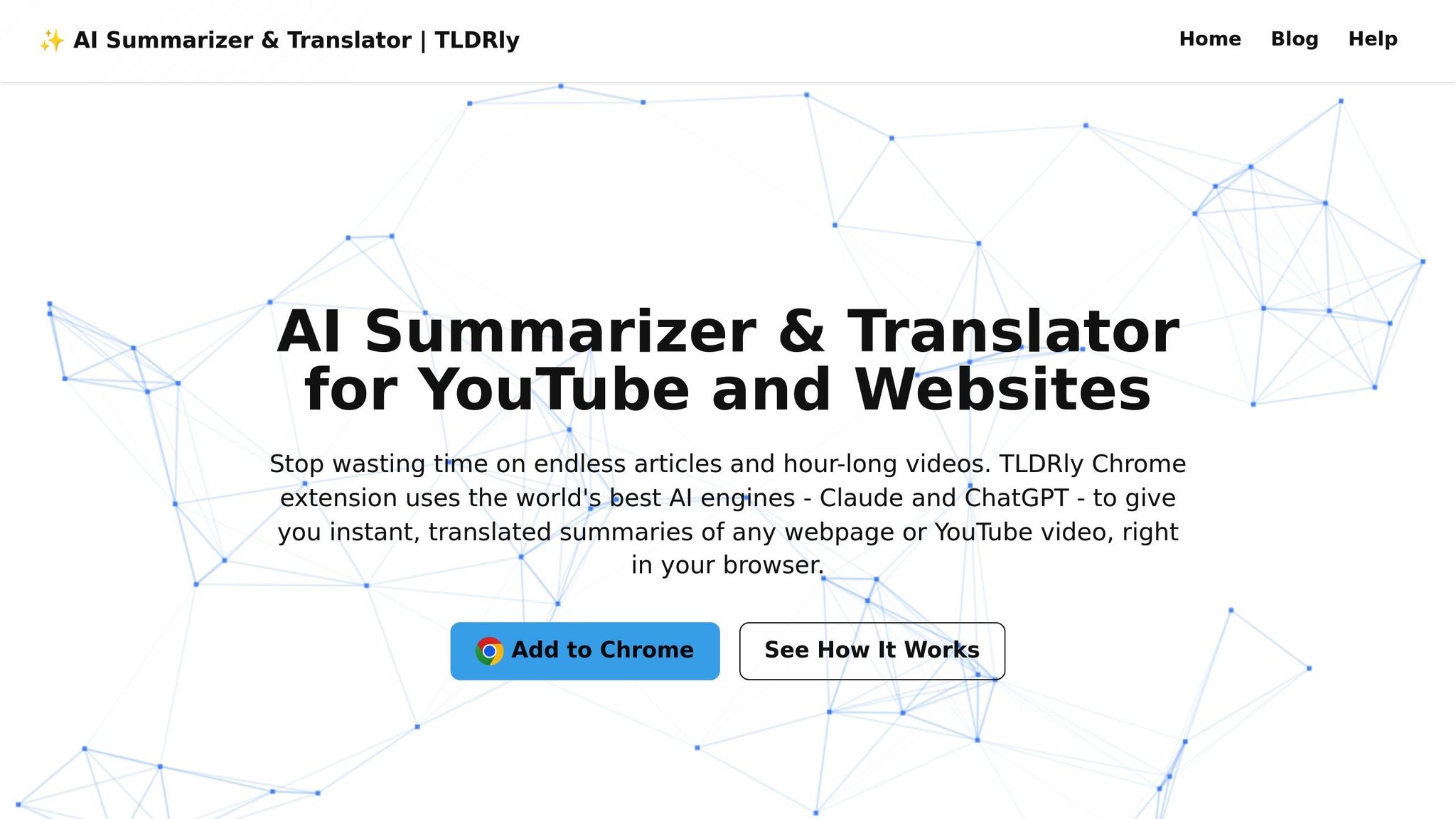
TLDRly shows what happens when you combine these AI techniques into a practical Chrome extension. It analyzes on-screen content and converts it into actionable insights—credibility scores, visual summaries, structured breakdowns.
What TLDRly Actually Does
- Post Trust Scores: Instant reliability assessment for articles and posts. No clicking around, no guesswork.
- Subreddit Analytics: Quick overview of Reddit communities by analyzing patterns across posts. Useful for gauging whether a subreddit trends toward quality discussion or conspiracy theories.
- Mindmaps: Visual overviews of complex research papers or guides. Connects key ideas so you can grasp structure before diving into details.
- Concise Summaries: LinkedIn profile summaries for quick candidate evaluation. Cuts through the self-promotional fluff.
- Clear Checklists: Transforms detailed manuals into step-by-step instructions. No more scrolling back and forth.
Practical Applications
Hiring managers use the LinkedIn summaries to review candidate profiles faster—identifying skills and experience without reading every endorsement. News readers rely on trust scores and subreddit analytics to evaluate trending stories before engaging. Researchers use mindmaps to break down dense academic papers into digestible structures. Anyone following technical instructions benefits from the checklist format that ensures nothing gets skipped.
Why Local Processing Matters
TLDRly runs in Chrome, which means your data stays local. Nothing gets uploaded to external servers for analysis. This isn't just a privacy feature—it's a fundamental design choice that keeps your browsing activity private while delivering fast results. And since everything lives in one extension, you're not juggling multiple tools or switching between tabs constantly.
Other AI Tools for Trust and Authenticity
TLDRly's approach works alongside other specialized AI tools. Understanding the landscape helps you build a more complete verification workflow.
Three Categories of Trust-Focused AI
Fact-checking tools: Platforms like Facticity AI, Pino, and FactSnap analyze text and classify claims as true, false, or unverifiable. They provide real-time truth scores with citations—essentially on-the-spot fact-checkers for specific claims[1].
AI-generated content detectors: Tools like QuillBot and Winston AI identify whether content is human-written or machine-generated. Helpful for distinguishing authentic human writing from bot output—increasingly important as AI-generated content floods the web.
Credibility scoring systems: Tools like TLDRly analyze multiple trust signals to generate overall reliability scores, offering broader evaluation than single-purpose fact-checkers.
Combining Tools for Better Results
TLDRly handles quick credibility assessment during normal browsing. For deeper verification—especially on high-stakes content—pairing it with specialized fact-checking tools gives you multiple layers of analysis. Each tool has different strengths, and knowing how they differ lets you adapt your approach based on how much verification the content warrants.
Practical Playbooks for US Readers
These aren't theoretical use cases. Here's how to actually integrate credibility checking into daily information consumption.
News Cycle Playbook
When major news breaks—Supreme Court rulings, natural disasters, election results—social media becomes a mixture of accurate reporting, premature speculation, and outright fabrication. TLDRly helps sort through it.
Start with trust scores before reading. See a breaking story on X, Facebook, or Reddit? Run TLDRly before clicking through. If an obscure website claims the Fed made an emergency rate decision, you'll know immediately whether to take it seriously.
Compare multiple sources on the same story. Use TLDRly to analyze several outlets covering the same event. This surfaces which sources offer balanced reporting versus which lean on sensationalism.
Extract and verify key claims during debates. Election cycles and policy debates generate countless specific claims. TLDRly pulls them out for quick verification so you're not just absorbing talking points.
Career and Hiring Playbook
LinkedIn profiles are exercises in self-promotion. TLDRly's profile summaries cut through the narrative and highlight actual skills and experience. Recruiters processing dozens of candidates get to substance faster. Job seekers can better evaluate whether companies' claims about culture and values match their communication patterns.
Social Feed Playbook
Social media is where misinformation thrives. TLDRly acts as a filter before you engage.
Health claims: Viral posts about miracle cures or shocking health revelations are constant. Before sharing or acting on health advice, run TLDRly to check whether it's from evidence-based sources or wellness influencer territory.
Financial advice: Cryptocurrency tips, stock recommendations, passive income promises—they're everywhere, and most are garbage. TLDRly's trust scoring helps identify whether financial claims come from reputable experts or promotional accounts.
Lifestyle content: Productivity hacks, diet trends, life optimization advice. TLDRly evaluates whether suggestions are backed by credible sources or just recycled conventional wisdom presented as insights.
Building the Daily Habit
Here's a practical routine:
- Morning (2 minutes): Run TLDRly on the top five stories from your news aggregator or social feed. This sets a baseline for the day.
- During work: Activate TLDRly on articles you encounter during research. Flag questionable content before it influences your thinking.
- Before posting (1 minute): Run TLDRly on anything you're about to share. This prevents you from becoming part of the misinformation chain.
- Weekly review (2 minutes): Notice which sources consistently score high or low. Adjust your follows and bookmarks accordingly. Your feeds will naturally improve.
Conclusion
The misinformation problem isn't getting better. Traditional fact-checking can't scale to match the volume of content being created. That's the reality TLDRly and similar tools address—providing AI-driven credibility assessment directly in your browser, at internet speed.
What makes this approach work is the real-time feedback loop. Whether you're evaluating breaking news during a chaotic event, reviewing LinkedIn profiles for hiring, or questioning viral health claims, you get immediate signal about reliability. Instead of spending mental energy second-guessing every piece of content, you get quick indicators that guide where to focus attention.
The browser integration matters more than it might seem. Analyzing content without switching tools or tabs reduces friction enough that you'll actually use it consistently. And consistent use is what builds better information habits over time.
Those earlier playbooks—morning news scans, work-time verification, pre-share checks—aren't complicated. But small, consistent actions compound. Over weeks and months, you develop better instincts for what deserves attention and what doesn't.
As misinformation tactics evolve, the tools for detecting them need to evolve too. Having a reliable AI assistant running in your browser isn't a luxury anymore—it's becoming baseline for anyone who wants to navigate online information competently. TLDRly helps you focus on content that's actually trustworthy, which ultimately means better decisions in both work and life.
FAQs
TLDRly processes data directly on your device whenever possible, keeping sensitive information local rather than sending it to external servers. When cloud processing is required, the tool uses encrypted connections to protect your data in transit.
The tool doesn't store or share your personal information or browsing history. This design choice means you can run credibility checks on any content without creating a trail of your reading habits or having your data aggregated somewhere.
This is genuinely hard. Satirical content often relies on context, cultural knowledge, and tone that AI systems struggle to interpret reliably. TLDRly's trust scoring works well for evaluating straightforward credibility signals—source reputation, claim verification, bias indicators—but satire can trigger false positives.
The practical approach: combine TLDRly's analysis with your own understanding of the content's context and intent. If something from The Onion gets flagged, you know why. If something from an unfamiliar source gets flagged, that flag is probably meaningful.
This happens. Here's how to handle it:
Review the flagged content carefully: Examine the source, context, and supporting evidence. Sometimes trustworthy material gets flagged due to language patterns or missing context that triggers the AI's detection systems.
Submit feedback: TLDRly improves through user feedback. If you believe content was incorrectly flagged, use the feedback mechanism to let them know. This helps refine the models.
Cross-reference with other sources: For added confidence, check whether other credible outlets are reporting the same information. Multiple independent sources reduce the likelihood of coordinated misinformation.
AI tools are useful filters, not final arbiters. Your judgment still matters—these tools just help you decide where to apply it.